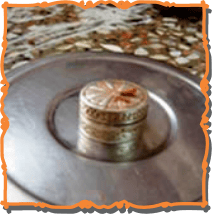
Punyasthala History
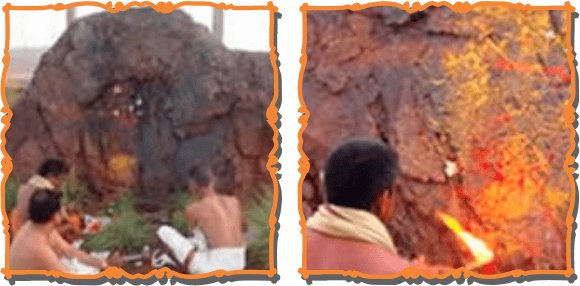
Narasimha Bande
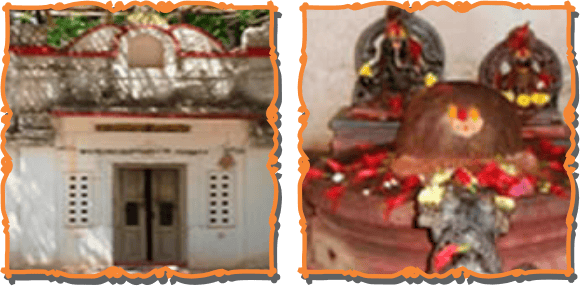
Shiva Temple
In the Thretha Yuga, this was part of Dandakaranya when Shri Ram on his way to Lanka established a Rameshwar (Shiva) Temple that is worshiped even today.

About Punyasthala
Punyasthala is unique for the Pavitra Dharma Grantha Mandir, a sanctum dedicated to sacred texts of all religions, and in positioning itself as a multi‑faith space for reflection, dialogue and spiritual growth.
History
Punyasthala, honoured as the ChaturthaMantralaya, rooted in the Dvaita tradition, is a contemporary spiritual centre inspired by the life and teachings of Shri Raghavendra Guruji. It is envisioned as a living Kshetra where devotion, service and knowledge come together for Loka Kalyana (welfare of all) and Viswa Shanti (universal peace).
h
Known as the “Chathurtha Mantralaya”, Punyasthala seeks to extend the grace of Raghavendra Guruji, beyond the original Mantralaya by creating a serene, disciplined environment where devotees can experience inner transformation through puja, yajna, study and selfless service. Every activity of the Ashram is dedicated to nurturing a compassionate, value‑based society.
h
Punyasthala is more than a destination; it is a spiritual continuation, dedicated sanctuary, for spiritual grounding and merit. In a world of constant motion, Punyasthala stands as a pillar of stability and spiritual knowledge. Here we believe that a "Sthala" is not merely a geographic location, but a vibration that transforms the person who enters to experience it.
Key Features and Practices
Pavitra Dharma Grantha Mandir displays holy texts from all religions (Bhagavad Gita, Holy Quran, Bible, Guru Grantha Sahib, Mahapurana and Mahayana Texts) under one roof, promoting Sarvadharma Samanvaya. Daily routines emphasize discipline, timeliness, and seamless operations, fostering spiritual growth.
History
The Sacred Punyasthala is located in the serene landscape of Channagiri Taluk, Davangere District is not merely a land of temples, but a spiritual epicenter where the divine presence of Guruji can be experienced.
The Vedic and Mythological Origins
The sanctity of Punyasthala spans the four great epochs (Yugas) of time, making it one of the most spiritually significant patches of land in Southern India.
- Krutha Yuga: It is believed that Bhakta Prahlada (the former incarnation of Shri Raghavendra Swamy) performed a grand Yagna and worshiped Shri Narasimha on this very land, then situated on the banks of the celestial river Swargawati. The Narasimha Bunde (Narasimha Rock) atop the hill remains a living testament to this event and is still worshiped today.
- Thretha Yuga: During the exile of Shri Rama, this area was a part of the vast Dandakaranya. Legend holds that Lord Rama established a Rameshwar (Shiva) Temple here on his way to Lanka, which continues to be a site of active worship.
- Dwapara Yuga: The Pandavas visited this region during their Vanavasa (forest exile). It is here that Bheemasena is said to have vanquished the demon Kimmisura, further purifying the land.
- Kali Yuga: More recently, in the last century, in 1926 Shri Susheelendra Thirtharu (34th Pontiff of Mantralaya), visited Basavapatna and predicted Guruji's birth and named the child Raghavendra before he was born. He blessed Shri Rama Rao Nadig and Savithra Amma (Guruji's parents) with Paduka used by Shri Raghavendra Swamy of Mantralaya.
Modern History
The modern history of Punyasthala began with the vision and devotion of Sri Raghavendra Guruji. Guided by a divine revelation from Shri Rayaru himself, Guruji was instructed to build this ancient land and establish an Ashram for humanity. Before any stone was laid, the land underwent rigorous purification through numerous Homas and Yagnas, aligning the physical space with its ancient spiritual heritage. The Ashram houses sacred deities that were gifted to Guruji’s ancestors by the great Sri Vidyaranya Swami (14th century) and Sri Vyasaraya Swami (15th century) of the Vijayanagara Empire—linking the Ashram directly to the golden era of the Madhwa lineage.
| Era | Historical/Mythological Event |
| Krutha Yuga | Bhakta Prahlada's Yagna and Narasimha Puja |
| Thretha Yuga | Lord Rama's installation of the Rameshwar Linga |
| Dwapara Yuga | Pandavas' visit and Bheema's victory over Kimmisura |
| Kali Yuga | Shri Raghavendra Guruji's an cestral connection to Sri Vidyaranya Swamy (13th Century) |
| Establishing Shri Raghavendra Krupashrama, Punyasthala (1977) |
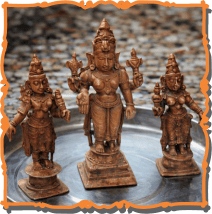
Shridevi Bhoodevi Srinivasa
Saligrama